
The Elements Of Strategy
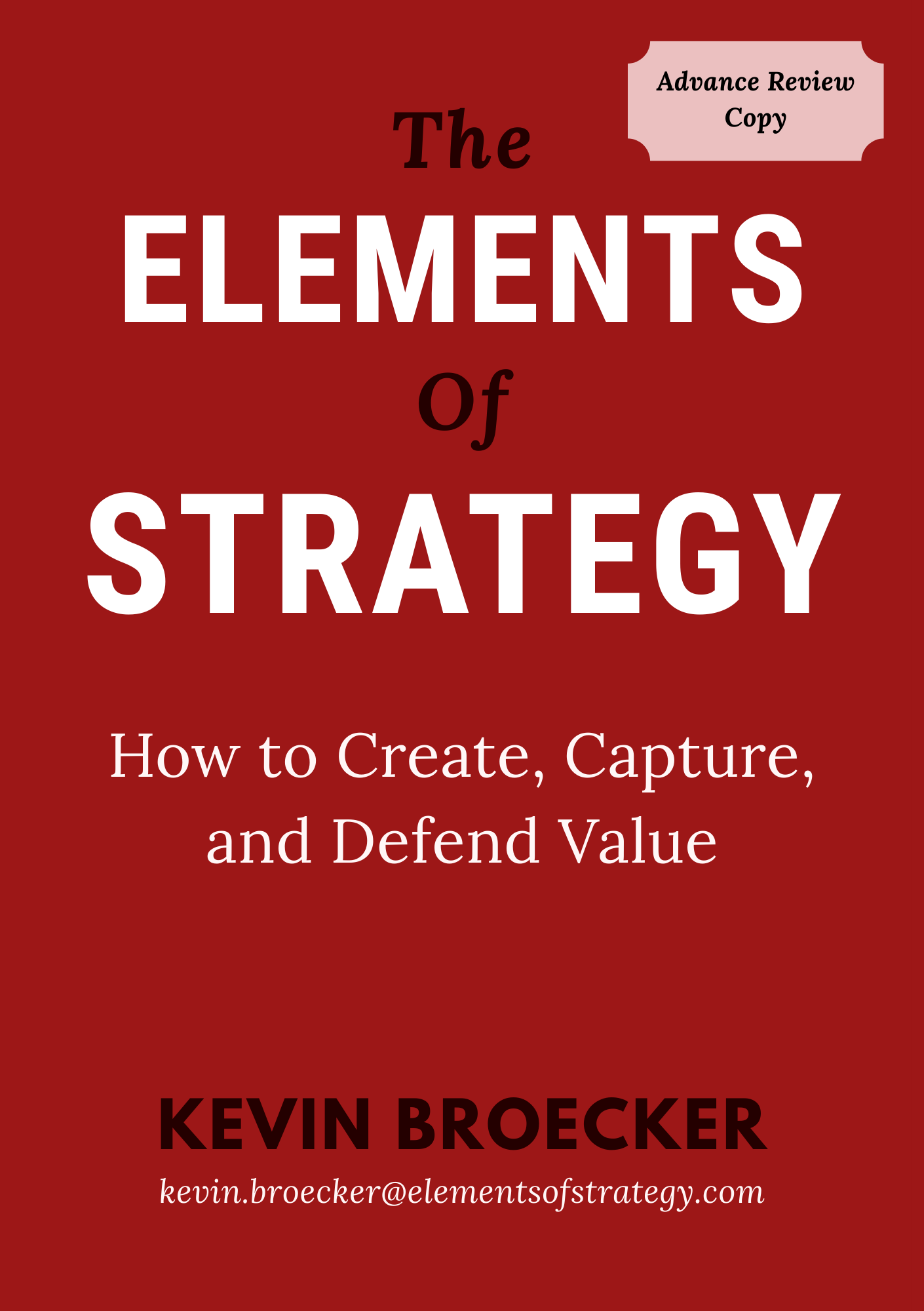
If you want to learn about strategy, you often face two bad options: shallow advice that is easy to consume but shallow, or abstract theory that is hard to apply.
The Elements of Strategy brings together the core ideas of strategy in clear language and concrete examples, making serious theory usable rather than abstract. It shows how customer choice, competition, pricing, organizational design, and culture fit together, so you can build a coherent mental model of how businesses create, capture, and defend value.
Whether you are a manager, founder, or investor, the book is designed to help you make better strategic decisions and better evaluate those of others.
The book’s outline
Part One: Strategic Thinking
Co-Opetition: Creating and Capturing Value — Firms create value with others and compete over the split.
The Value Net: Introducing the Players — Customers, suppliers, competitors, complementors, and rule makers shape the value available and who captures it.
Real Options: When to Stay Flexible — How uncertainty changes strategy by making flexibility, experimentation, and timing economically valuable.
Part Two: Managing the Company
Jobs to be Done: The Customer’s Perspective — How understanding the customer’s job helps firms design offerings and business models that fit real needs.
The Value Chain: Getting the Job Done — How firms translate customer insight into a tailored set of activities that creates more value than the alternatives.
The Organization: Structure Shapes Strategy — Strategy depends on organizational design giving people the incentives, authority, and coordination to act accordingly.
Culture: Eating Your Strategy for Breakfast — Culture reinforces or undermines strategy by shaping how people think, decide, learn, and work together.
The Scope: What to Do Ourselves — Firms should decide which activities and markets to include by weighing added value, control, complexity, and flexibility.
Part Three: Competition and Its Limits
Pricing: Capturing Value — Firms turn value into profit by pricing with customers, costs, and competitors’ likely reactions in mind.
Entrants: Eroding Added Value — How entry barriers determine whether firms can protect their added value and sustain attractive economics over time.
Scale Effects: When Size Matters — How scale can create cost and value advantages that make it harder for smaller rivals to catch up.
Learning Effects: Knowledge Is Power — How accumulated know-how can improve products or lower costs and become a barrier when others cannot easily copy it.
Multihoming and Switching Costs: Making It Hard to Leave — How lock-in frictions protect incumbents by making it harder for customers and partners to move elsewhere.
Network Effects: Controlling Complements — How networks become more valuable as they grow, and when that growth turns into durable competitive advantage.
Branding: Building a Reputation — How brands create value by shaping expectations and trust, and when that reputation becomes hard for rivals to replicate.
About me
Hey, my name is Kevin (My LinkedIn)
I’m an equity analyst for a long-term focused asset manager in Germany. I’ve spent the last years reading the business strategy literature and analyzing companies, trying to understand why some manage to add value and build durable positions while others do not. This book is my attempt to distill those patterns into a set of simple but rigorous ideas and tools managers and investors can use.